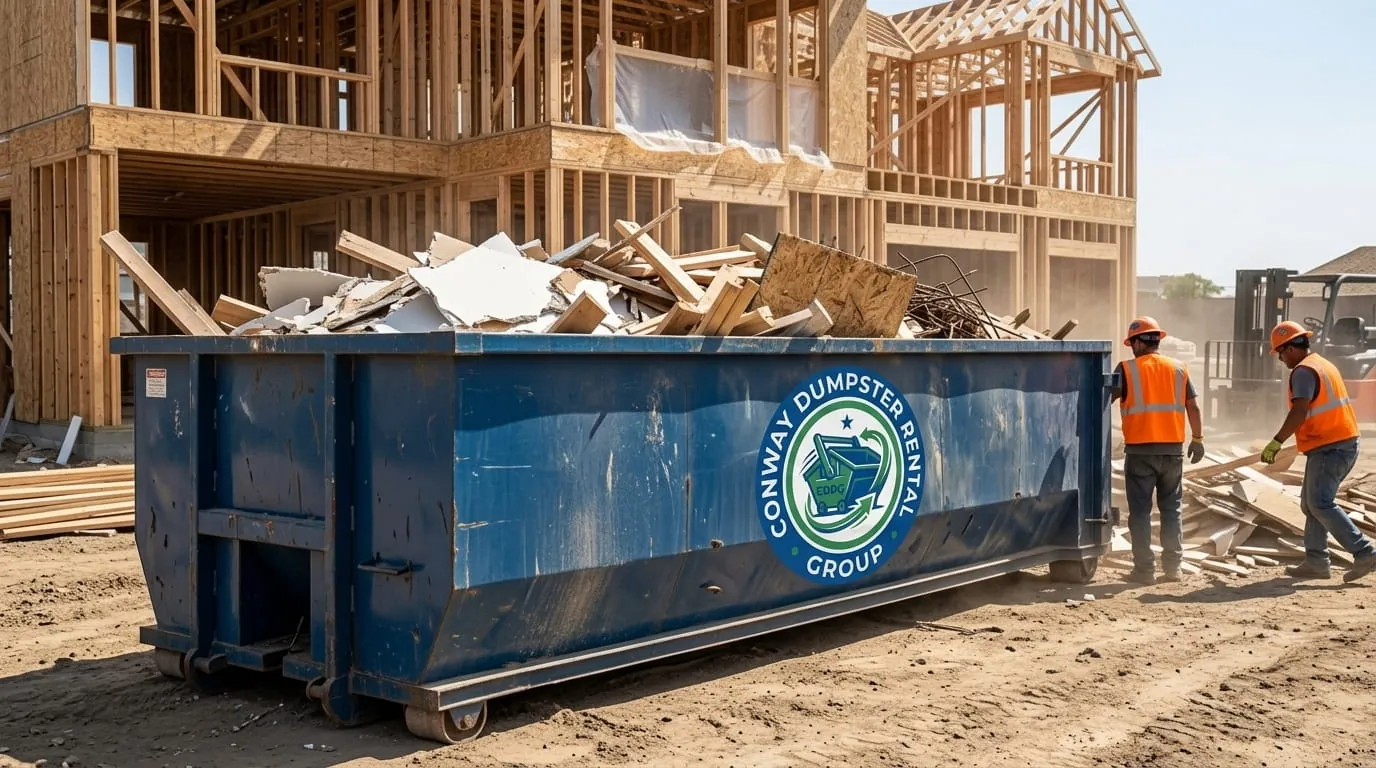
Every renovation and build in Central Arkansas produces two things: the work you get paid for, and the pile you have to deal with afterward. The pile is where a lot of otherwise sharp contractors lose money. Overloaded containers, mixed loads that get rejected, swaps that show up a day late and stall the crew, the surcharge for that pallet of broken block sitting on top of drywall. None of it is complicated, but all of it costs time. This guide walks through how to handle construction debris disposal the way experienced crews around Conway and Faulkner County actually do it.
Know What You're Throwing Away
The single biggest mistake on a jobsite is treating debris as one undifferentiated mess. It isn't. Different materials weigh differently, recycle differently, and get charged differently at the scale. If you can name what's in your pile before it goes in the box, you can manage it. Here's the breakdown most residential and light-commercial jobs run into.
| Debris Type | Handling & Recycling Note |
|---|---|
| Dimensional lumber & wood | Clean, untreated wood is often recyclable or reusable. Keep treated, painted, and engineered wood separate — it's usually landfill-bound and can't be ground for mulch. |
| Drywall / gypsum | Bulky but light. Some facilities recycle clean gypsum scrap; painted or moldy board goes to landfill. Break sheets down flat to save air space. |
| Roofing (asphalt shingles) | Heavy and dense — a full tear-off adds up fast. Asphalt shingles are recyclable into road base at select facilities; keep them free of nails-heavy underlayment where possible. |
| Flooring (tile, vinyl, carpet) | Mixed streams. Carpet and pad are light and bulky; tile and thinset are heavy. Separate the two so a light load doesn't get charged like a heavy one. |
| Concrete, brick & block | Extremely heavy. Keep it in its own container — it's frequently crushed and recycled into aggregate and priced by weight, not volume. |
| Metal (studs, wire, flashing, ductwork) | Almost always recyclable and often worth money. Pull it out and set it aside; scrap steel, copper, and aluminum shouldn't ride to the landfill. |
| Packaging & cardboard | Clean cardboard, banding, and shrink wrap are recyclable and compress well. Flatten boxes so they don't eat container space you paid for. |
Why Sorting Actually Pays
Sorting sounds like extra labor, and on the surface it is. But it buys you three things that matter on a budget. First, weight control — heavy material like concrete or tile mixed into a general load can push a container over its tonnage allowance and trigger overage fees. Second, recycling access — a clean, single-material load of metal or concrete can be diverted instead of dumped, which keeps your disposal costs and your landfill footprint down. Third, fewer rejected loads — haulers and transfer stations turn away mixed loads that contain the wrong materials, and a rejected load is a wasted trip.
The practical move is to stage your debris as you generate it. A metal bin near the framing, a spot for clean wood, and the main container for general mixed C&D. Keep the heavy aggregate in a dedicated concrete and heavy debris box so it never contaminates a lighter load or blows past your weight limit.
A crew that separates metal, clean wood, and concrete at the point of demo rarely pays a surcharge and almost never gets a load turned away. The five minutes of staging up front is cheaper than the trip back.
Recyclable vs. Landfill: A Quick Field Read
You won't always have a scale or a sorting yard on site, so learn to read materials fast. As a rough rule: metals, clean concrete and masonry, clean untreated wood, cardboard, and asphalt shingles all have recycling pathways in the Central Arkansas region. Painted or treated wood, drywall that's been wet or painted, mixed flooring with adhesives, insulation, and general "fines" — the swept-up dust and small debris — typically head to the landfill.
Handle These With Extra Care
Some materials aren't just non-recyclable, they're regulated. Anything you suspect contains asbestos — old floor tile, certain mastics, some pipe insulation in pre-1980s structures — stops the job until it's tested and handled by a licensed abatement contractor. It does not go in a dumpster. The same caution applies to lead paint debris, treated railroad ties, and household hazardous items that sneak into remodels: paint, solvents, batteries, and fluorescent tubes. When in doubt, ask before you toss.
Right-Sizing the Container
Renting the wrong size is the quiet budget killer. Too small and you're paying for a second haul or, worse, stacking debris on the ground where it becomes a safety and code problem. Too big and you're paying for air. For most whole-home remodels, roof tear-offs, and mid-size demo work, a 30-yard dumpster is the workhorse — enough volume for bulky mixed debris without committing to a roll-off you can't fill.
Match the box to the material, not just the job. A kitchen gut with cabinets and drywall is a volume problem — you need cubic yards. A concrete driveway removal is a weight problem — you need a smaller, heavy-rated container even though the pile looks modest. This is exactly why concrete and shingles get their own box: they'd max out a general container's weight limit long before they filled it. If you're unsure which size fits, our team sizes containers over the phone every day for local jobs. Call (501) 585-7772 and describe the work — we'll steer you right.
Plan Your Swaps So the Crew Never Stops
On a phased job, an empty container is as bad as a full one — either way the work stops. The fix is to think about swaps before you need them. If you know the demo phase will fill a box by Thursday, schedule the swap for Thursday morning, not Friday afternoon when the crew is already stepping over debris. Build a little slack into the schedule for weather and access; a spring storm in Faulkner County can put a truck a day behind.
Good scheduling is mostly communication. Tell your hauler your timeline up front, flag the big-debris days, and confirm access — where the truck drops, whether it needs clearance, and who's on site to point. A well-run construction dumpster rental is less about the steel and more about the container being empty and in place when your crew needs it.
Site Cleanliness and Safety
A clean jobsite isn't a nicety — it's fewer nail punctures, fewer trip-and-fall claims, and a faster final walkthrough. Keep walking paths clear, sweep fines and fasteners daily, and load debris into the container rather than letting it drift into piles. Don't overfill: material heaped above the rails can't be legally hauled, shifts in transit, and often gets left behind until you level it. Load heavy items low and flat, distribute weight across the box, and keep long pieces from bridging so the container packs tight instead of leaving voids.
For larger tear-outs and structural demolition, the debris stream gets heavier and more mixed, and the staging plan matters even more. Our demolition debris removal crews plan container placement and swap timing around the demo sequence so the material has somewhere to go the moment it comes down.
Staying Compliant
Disposal rules exist for a reason, and the penalties for ignoring them land on the contractor, not the homeowner. Use permitted facilities and licensed haulers. Never burn construction debris or dump it on a back lot — illegal dumping carries real fines in Arkansas and follows your business name. Keep your disposal tickets; on commercial and permitted residential work they're often part of the closeout documentation, and they're your proof the material went where it was supposed to. If a job involves regulated materials, document the abatement and disposal chain from start to finish.
Handled right, construction debris disposal is just another line item you control instead of one that surprises you. Sort at the source, right-size the box, separate the heavy stuff, plan your swaps, and stay compliant — and the pile stops being the part of the job that costs you.
Let's Get Your Next Job's Debris Handled
Whether you're tearing off a roof in Conway, gutting a kitchen in Greenbrier, or clearing a slab in Vilonia, we'll match the container to the material and keep your swaps on schedule. Reach out through our contact page or call (501) 585-7772 and tell us about the job — we'll handle the pile so you can handle the build.
Founder, Conway Dumpster Rental Group — sharing straight advice from more than 15 years of local hauling experience.
Frequently Asked Questions
Can I put concrete in a regular construction dumpster?
It's better not to. Concrete, brick, and block are extremely heavy and will hit a general container's weight limit long before filling it, which usually triggers overage fees. Keep heavy aggregate in a dedicated concrete and heavy-debris container so it can be weighed and recycled properly. Call (501) 585-7772 and we'll set you up with the right box.
What construction materials can actually be recycled in Central Arkansas?
Metals (steel studs, wire, copper, flashing), clean concrete and masonry, clean untreated wood, cardboard and packaging, and asphalt shingles all have recycling pathways in the region. Painted or treated wood, wet or painted drywall, mixed flooring with adhesives, and general fines typically go to the landfill. Sorting single-material loads is what makes recycling possible.
What size dumpster do I need for a home renovation?
For most whole-home remodels, roof tear-offs, and mid-size demolition, a 30-yard dumpster handles bulky mixed debris well. But size depends on whether your job is a volume problem (drywall, cabinets) or a weight problem (concrete, tile) — heavy material needs a smaller, heavy-rated box. Describe your job to us at (501) 585-7772 and we'll size it for you.
How do I avoid downtime waiting on a dumpster swap?
Plan swaps before you need them. Tell your hauler your timeline up front, flag the big-debris days, and schedule the swap for the morning you expect the box to fill rather than after it's already overflowing. Build in slack for weather and confirm truck access. Good swap scheduling is mostly clear communication about your phases.
Can I throw hazardous or regulated materials in the container?
No. Suspected asbestos (old floor tile, some pipe insulation), lead paint debris, treated railroad ties, and household hazardous items like paint, solvents, batteries, and fluorescent tubes cannot go in a construction dumpster. Asbestos requires a licensed abatement contractor before work continues. When in doubt, ask us before you toss it — call (501) 585-7772.