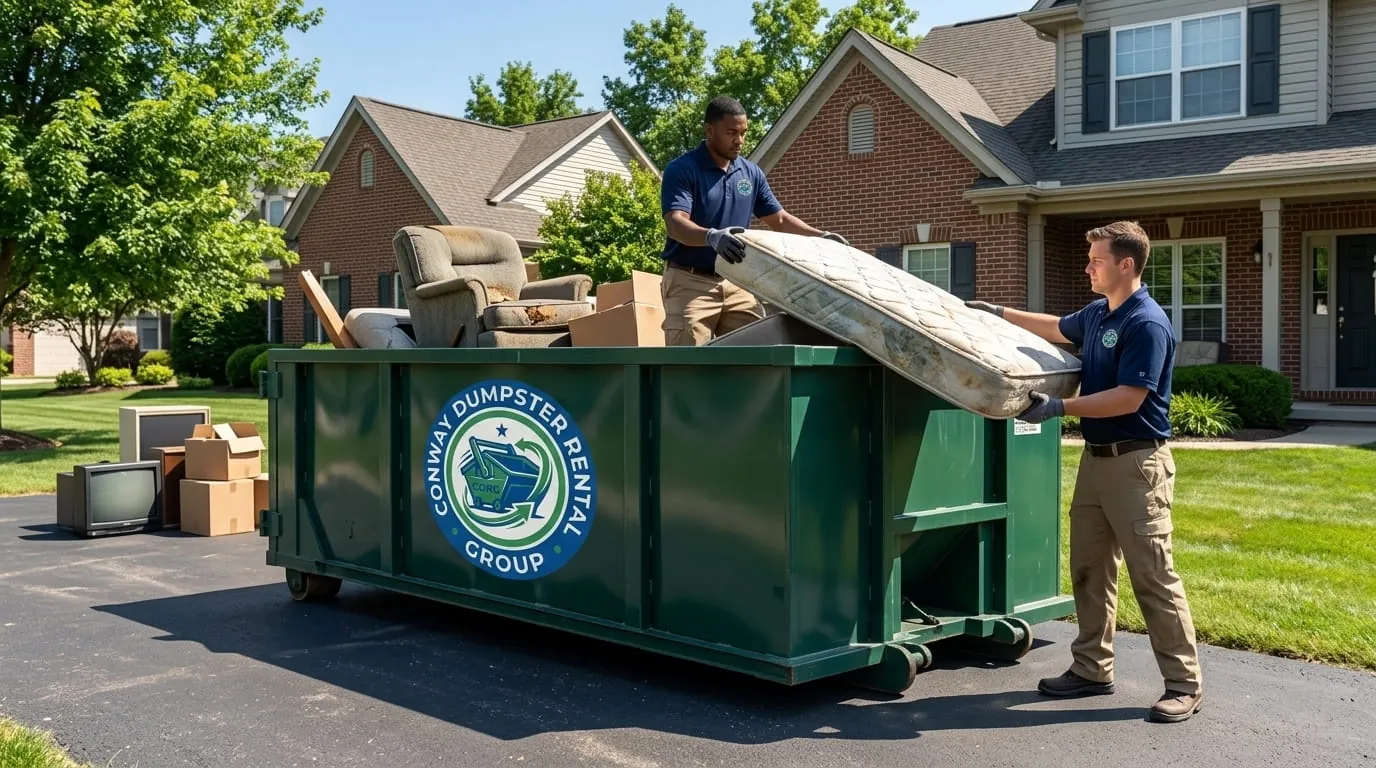
Every big cleanout starts the same way: you open the garage door, look at fifteen years of accumulation, and immediately want to close it again. After years of helping Conway and Faulkner County families empty out garages, basements, estates, and whole houses, we can tell you the secret isn't willpower. It's a plan. A good home cleanout checklist turns an overwhelming mountain into a series of small, finishable jobs - and that's what actually gets a house cleared.
This guide walks you through the whole house, room by room, with a simple sorting system, tips to keep your momentum up, and honest notes on what to do with the stuff you can't just throw in a trash bag. Let's get to work.
Before You Start: The Keep / Donate / Sell / Toss System
Decision fatigue is what kills most cleanouts. When you have to invent a plan for every single object, you burn out by lunchtime. The fix is to decide your categories once, up front, and then just sort. Set up four zones before you touch anything:
- Keep - it earns its place. You use it, love it, or genuinely need it. Everything you keep should have a home to go back to.
- Donate - usable, but not by you. Clothing, working small appliances, books, toys, and furniture in decent shape. Conway has several charities and thrift stores that will take these.
- Sell - worth real money and worth the effort. Be honest here; a $5 Facebook Marketplace listing that sits for three months isn't a win.
- Toss - broken, expired, or genuinely trash. This is where a dumpster earns its keep, and where most people underestimate the volume.
The single biggest mistake we see is the "maybe" pile. "Maybe" is just "keep" wearing a disguise, and it grows until it swallows the whole project. Give yourself two boxes for genuine undecideds, and when they're full, you make the call - no third box.
Grab painter's tape and label four areas of your driveway or yard. Physically moving items into zones makes the progress visible, and visible progress is fuel.
Work in Phases, Not Marathons
You don't have to do the whole house in a weekend, and trying to is how projects stall out half-finished. Pick one room, block off two to four hours, and finish that room completely before moving on. A finished room is a reward; three half-done rooms are a stress.
A few things that keep the energy up: start with the easiest room to build a quick win, set a timer so breaks stay breaks, play music, and keep water and snacks nearby. And schedule your disposal around your pace - if you know you'll be at it for a week, having a container in the driveway the whole time beats making a dump run every evening.
The Garage
Start here. The garage is usually the biggest volume, the least sentimental, and the most motivating once it's clear. Pull everything out onto the driveway if you can - it's amazing how much you'll toss once you see it all in daylight.
- Broken or duplicate tools, and hardware you can't identify
- Dried-out paint, old stain, and empty containers
- Cardboard boxes you've been "saving"
- Sporting gear and bikes nobody's touched in years
- Half-used chemicals, pesticides, and automotive fluids (set aside - see safe disposal below)
- Scrap lumber, old car parts, and rusted patio furniture
Garages produce the heavy, awkward stuff that fills a trailer fast. This is exactly where a residential dumpster rental pays for itself - you toss as you sort instead of stacking a "to the dump" pile that never leaves.
Basement, Attic & Storage
These are the archaeology layers of a house - stuff goes in and never comes out. Attics also get hot and cramped, so work in short shifts and stay hydrated.
- Water-damaged or musty boxes (check for mold before handling)
- Old electronics, tube TVs, and tangled cables
- Holiday decorations you no longer use
- Baby gear and kids' items your family has outgrown
- Broken furniture and "I'll fix it someday" projects
- Paperwork - shred anything with personal info; recycle the rest
If you're clearing a basement or attic as part of settling a loved one's home, the emotional and logistical load is different. Our estate cleanout checklist covers that situation with more care and detail.
The Kitchen
Kitchens hide clutter behind cabinet doors, so open every one. Work counter by counter, drawer by drawer.
- Expired food, spices, and pantry items
- Chipped dishes, mismatched mugs, and orphaned lids
- Duplicate gadgets and the single-use appliance you used once
- Worn-out cookware, stained plastic containers, and scratched nonstick pans
- Dead small appliances - donate working ones, toss the rest
- Takeout menus, expired coupons, and the junk drawer's entire contents
Bedrooms & Closets
Closets are where the keep/donate/sell/toss system really shines. Pull every hanger. If you haven't worn it in a year and it isn't seasonal or sentimental, it goes.
- Clothes and shoes that don't fit or you don't wear
- Worn-out linens, pillows, and towels (animal shelters often take these)
- Nightstand and dresser-drawer clutter
- Old cosmetics and expired medications (see disposal notes)
- Broken jewelry, dead earbuds, and stray cords
- Books and magazines you're done with
Try the reverse-hanger trick: turn every hanger backward, and when you wear something, hang it the right way. In six months you'll see exactly what you never touch.
Living Areas & Home Office
These rooms collect "landing pile" clutter - things that got set down and never picked back up.
- Old magazines, newspapers, and junk mail
- Broken or outdated electronics and remotes for devices you no longer own
- Worn furniture, sagging cushions, and tired rugs
- DVDs, CDs, and video tapes
- Decor you've fallen out of love with
- Office paperwork - shred, file, or recycle, with nothing left in "limbo"
Outdoor Areas & the Shed
Save the outside for a day with good weather and good energy - it's often the final push.
- Rusted or broken garden tools and hoses
- Cracked pots, broken planters, and bags of hardened concrete or soil
- Old grills, fire pits, and patio furniture past saving
- Kids' outdoor toys and deflated pools
- Leftover fencing, lumber, and building scraps
- Lawn chemicals and fuel (handle as hazardous - see below)
Safe Disposal: What Doesn't Belong in a Dumpster
A dumpster handles the overwhelming majority of a household cleanout - furniture, junk, boxes, general debris. But a few things need special handling for safety and legal reasons, and you shouldn't put them in any roll-off:
- Paint, solvents, and automotive fluids - dry out latex paint and toss the empty can, but take oil-based paint and chemicals to a hazardous-waste collection.
- Pesticides, lawn chemicals, and fuel - hazardous-waste only.
- Batteries, electronics, and CFL/fluorescent bulbs - use e-waste and battery recycling drop-offs.
- Tires, appliances with refrigerant, and propane tanks - these often need dedicated recycling or special handling.
- Medications - use a pharmacy take-back program, never the trash or drain.
Not sure whether an item is a problem? Just ask us when you book. We'll tell you what can go in the container and point you to the right drop-off for the rest.
Why a Dumpster Beats Repeated Dump Runs
Here's the math people miss. A real cleanout generates more waste than a few pickup loads, and each trip to the transfer station costs you gas, time, dump fees, and the energy of loading and unloading - twice. Do that five or six times over a week and you've spent more, and lost more Saturdays, than a single dumpster would have cost.
With a roll-off in the driveway, you throw things away the moment you decide, which keeps the whole project moving. No staging pile, no borrowed truck, no back strain from double-handling. For most whole-house or garage-and-basement projects, our 15-yard dumpster is the sweet spot - big enough for furniture and heavy debris, compact enough to fit a normal driveway.
If your cleanout is smaller, or you'd rather not lift a thing, our junk removal service can do the hauling for you. Either way, the goal is the same: get it out of your house in one clean sweep.
Ready to knock out your cleanout? Call Conway Dumpster Rental Group at (501) 585-7772 for straight advice on the right size and a fast quote.
Your Room-by-Room Game Plan
Print this order and check off each room as you finish: Garage, Basement/Attic, Kitchen, Bedrooms & Closets, Living Areas & Office, Outdoor & Shed. One room at a time, four sorting zones, a container in the driveway, and steady phases instead of one exhausting marathon. That's how a house that felt impossible gets cleared - and stays that way.
When you're ready to make it easy, get in touch or call (501) 585-7772. We'll get a dumpster to your Conway or Faulkner County driveway so the only thing you have to think about is deciding what stays.
Founder, Conway Dumpster Rental Group — sharing straight advice from more than 15 years of local hauling experience.
Frequently Asked Questions
What size dumpster do I need for a whole-home cleanout?
For most whole-house cleanouts or a combined garage-and-basement project, a 15-yard dumpster is the sweet spot - it holds furniture and heavy debris while still fitting a standard driveway. Bigger cleanouts or homes with lots of large furniture may need a 20-yard. If you're not sure, call us at (501) 585-7772 and describe what you're clearing; we'll recommend the right size so you don't overpay or run out of room.
Is renting a dumpster really cheaper than making dump runs?
For a real cleanout, almost always. Multiple trips to the transfer station add up in gas, dump fees, and lost time - plus you handle every item twice. A single roll-off lets you toss as you sort, in one flat rate, which usually costs less and saves your weekends. It also keeps the project moving instead of stalling behind a growing "to the dump" pile.
What can't I put in the dumpster?
Skip hazardous and specially regulated items: wet paint, solvents, automotive fluids, pesticides, fuel, batteries, electronics, fluorescent bulbs, tires, propane tanks, appliances with refrigerant, and medications. Most of these have local hazardous-waste or recycling drop-offs. Everything else - furniture, junk, boxes, and general household debris - is fine. When in doubt, ask us before you toss it.
How long can I keep the dumpster during my cleanout?
Because cleanouts often run over several days or a full week, we build rental periods around your pace so the container is there when you need it. Having it in the driveway the whole time is exactly what makes a phased, room-by-room approach work. Call (501) 585-7772 to talk through your timeline and we'll set up terms that fit your project.
Where should I start a home cleanout to stay motivated?
Start with the garage. It's usually the largest volume, the least sentimental, and the most satisfying room to see cleared, which builds momentum for the rest of the house. From there, work one room at a time - basement or attic, kitchen, bedrooms and closets, living areas, then outdoor spaces - and finish each room completely before moving on so you always feel progress.