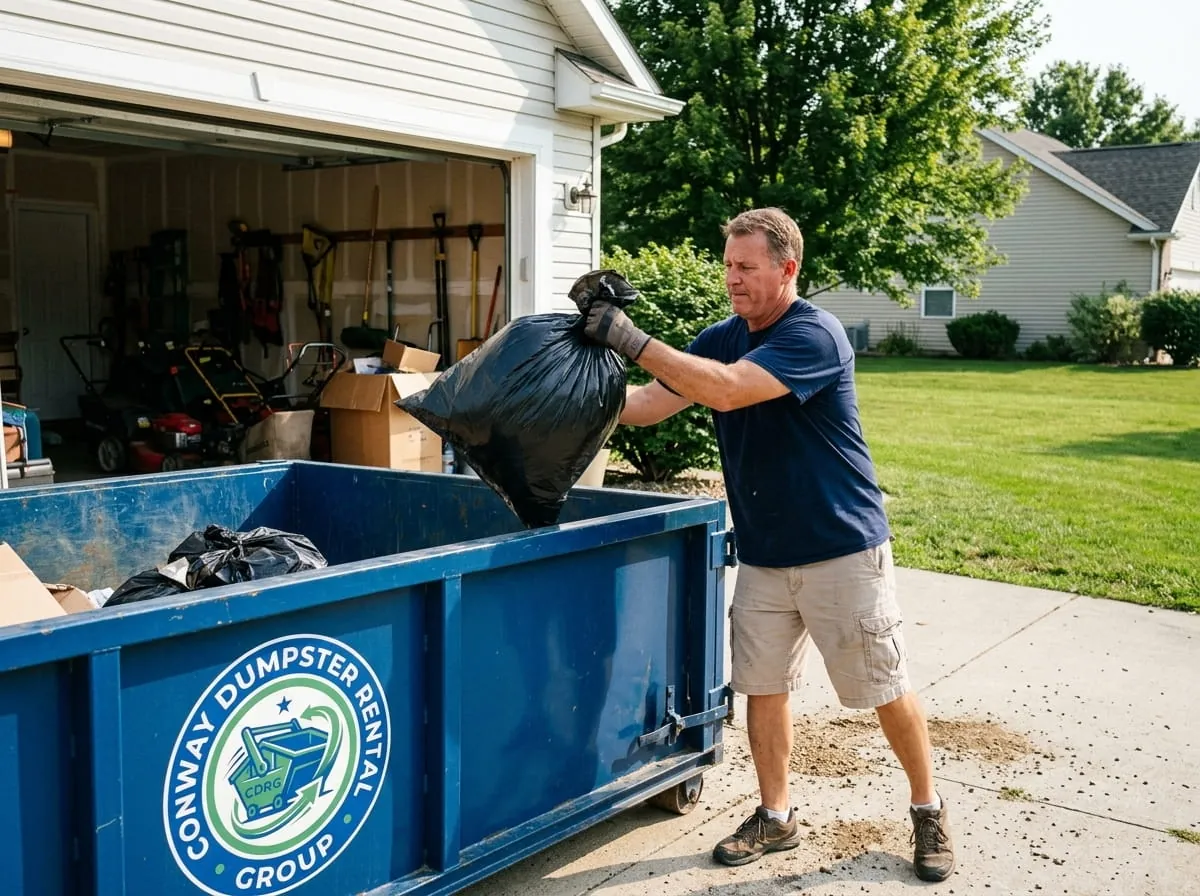
One of the first questions we get on nearly every call is some version of, "Can I just throw everything in there?" It's a fair question. You've rented a big steel container, it's sitting in your driveway, and the temptation is to fill it with whatever the project throws at you. Most of the time that's exactly how it works. But a handful of items can get a load rejected at the landfill, hit you with surcharges, or in a few cases create a real safety hazard for the driver hauling it.
After years of running roll-offs across Conway and the rest of Faulkner County, we've learned that a two-minute explanation up front saves everyone a headache later. So here's the honest, complete breakdown: what's fair game, what's forbidden, and what needs a little extra planning.
The Good News: Most of Your Junk Is Fair Game
If you're clearing out a house, tearing into a remodel, or cleaning up the yard, the vast majority of what you generate is perfectly welcome in a dumpster. Non-hazardous, everyday debris is the bread and butter of what these containers were built to haul.
Here's what you can toss without a second thought:
- Household junk — old clothing, toys, boxes, general clutter from a garage or attic cleanout
- Furniture — couches, chairs, tables, dressers, bookshelves, and desks
- Renovation debris — drywall, plaster, lumber, trim, cabinetry, flooring, tile, and countertops
- Wood — framing scraps, plywood, fencing, decking, and untreated pallets
- Roofing material — asphalt shingles, felt, and underlayment
- Yard waste — branches, brush, leaves, sod, and small stumps
- Bagged trash — the ordinary bagged garbage that piles up during a big project
- Non-hazardous construction materials — insulation, PVC, metal studs, and siding
If it's dry, non-toxic, and won't catch fire or leak, odds are strong it belongs in the bin. When your cleanout is mostly this kind of material, a straightforward junk removal or construction dumpster rental is usually all you need.
The Hard No's: What Can Never Go in a Dumpster
The prohibited list is short, but it matters. These items are banned for real reasons — they're hazardous to handle, they contaminate landfills, they violate transport rules, or they're regulated by state and federal law. Arkansas, like every state, keeps hazardous and specially regulated waste out of the standard municipal solid waste stream, and that filters straight down to what a roll-off is allowed to carry.
Keep these out of the dumpster:
- Hazardous waste of any kind — solvents, pesticides, herbicides, pool chemicals, and cleaning acids
- Wet paint, stains, and lacquers — liquids leak and are considered hazardous (fully dried-out latex paint cans are sometimes fine, but ask first)
- Motor oil, gasoline, antifreeze, and other automotive fluids
- Tires — they trap methane, damage landfill liners, and are banned from disposal this way
- Batteries — car batteries and lithium-ion batteries can leak acid or ignite
- Appliances with refrigerants — refrigerators, freezers, AC units, and dehumidifiers must have the coolant professionally recovered first
- Asbestos — found in older insulation, siding, and floor tile; requires licensed abatement
- Medical waste — needles, sharps, and biohazard material
- Propane tanks and other pressurized cylinders — an explosion risk when compacted or crushed
The single biggest reason these items are banned comes down to what happens after the truck leaves your driveway. A leaking chemical container can contaminate an entire load, and a compacted propane tank or lithium battery can spark a fire inside the truck or at the transfer station. The rules exist to protect the driver, the facility, and the groundwater — not to make your life harder.
When in doubt, don't guess. Set the item aside and give us a call at (501) 585-7772 before it goes in the bin. We'd much rather answer a quick question than see a load flagged.
The Maybe Pile: Special-Handling Items
This is the category people miss most often. Some items aren't banned outright, but they need special handling — a separate fee, a dedicated container, or a phone call to sort out the details. Toss them in without a heads-up and you might be surprised at pickup.
Mattresses and Box Springs
Many landfills charge a per-item recycling fee for mattresses because their springs and foam are tough to process. You can usually include them, but it's worth flagging so we can quote it accurately.
Appliances (the "White Goods")
Stoves, washers, dryers, and dishwashers are generally accepted. The catch is anything with a refrigerant — as noted above, fridges and AC units need their coolant recovered by a technician before they can be hauled.
Concrete, Brick, and Heavy Debris
Concrete, asphalt, brick, dirt, and rock are all recyclable and completely acceptable — but they're extraordinarily heavy. A dumpster full of concrete can blow past a truck's legal road weight fast, so these materials almost always go in a dedicated container with a fill line. If your project involves a torn-out patio or foundation, look at our concrete and heavy debris service so we can size it right and keep the load legal.
Electronics (E-Waste)
TVs, monitors, and computers contain lead and other materials that many jurisdictions steer toward dedicated recycling. Whether they can ride along depends on the load and the destination facility, so check with us first.
Quick-Reference Table
Here's the whole thing at a glance. Save it, screenshot it, whatever works — but remember these are general guidelines. If your specific item isn't listed, a quick call clears it up instantly.
| Item | Status | Notes |
|---|---|---|
| Household junk & furniture | Allowed | The standard load — no problem |
| Drywall, wood, flooring, tile | Allowed | Typical renovation debris |
| Asphalt shingles / roofing | Allowed | Heavy — mention the square footage |
| Yard waste & brush | Allowed | Branches, leaves, small stumps |
| Mattresses | Special handling | Possible per-item recycling fee |
| Stoves, washers, dryers | Special handling | Generally fine; no refrigerant units |
| Concrete, brick, dirt, rock | Special handling | Use a dedicated heavy-debris container |
| Electronics / TVs | Special handling | May require e-waste recycling |
| Wet paint & chemicals | Prohibited | Liquid hazardous waste |
| Oil, gas, antifreeze | Prohibited | Automotive fluids |
| Tires | Prohibited | Banned from landfill disposal |
| Batteries | Prohibited | Leak and fire risk |
| Fridges, freezers, AC units | Prohibited (as-is) | Allowed only after refrigerant recovery |
| Asbestos | Prohibited | Requires licensed abatement |
| Medical / biohazard waste | Prohibited | Needs specialized disposal |
| Propane & pressurized tanks | Prohibited | Explosion risk when crushed |
Why These Rules Exist
None of this is red tape for its own sake. Weight limits protect Arkansas roads and keep trucks under legal axle loads. Hazardous-material bans protect the workers who handle your debris and the landfills that receive it. Recycling requirements for tires, concrete, and electronics keep valuable and dangerous materials out of the ground. When everyone follows the same short list, disposal stays cheap, safe, and predictable — and that's ultimately what keeps your rental affordable.
It's also worth remembering that the dumpster is only one piece of the puzzle. Depending on where you're placing it, you may also need to think about placement rules — our guide on whether you need a permit for a dumpster in Conway, AR covers that side of things.
Still Not Sure? Just Ask
Here's the bottom line after all these lists: you do not have to memorize any of it. The only mistake that actually costs you money is guessing wrong on a prohibited item and having a load rejected. We talk homeowners and contractors through their debris every single day, and there is no such thing as a dumb question when it comes to what's safe to haul.
If you've got an odd item, a mixed load, or a heavy demolition project and you're not sure how to handle it, pick up the phone. Call Conway Dumpster Rental Group at (501) 585-7772, or send us the details through our contact page. We'll tell you straight whether it can go in the bin, whether it needs its own container, or whether it's one of the few things that has to be handled another way — and we'll get you the right dumpster for the job.
Founder, Conway Dumpster Rental Group — sharing straight advice from more than 15 years of local hauling experience.
Frequently Asked Questions
Can I put a refrigerator or freezer in the dumpster?
Not as-is. Refrigerators, freezers, AC units, and dehumidifiers contain refrigerants that must be professionally recovered by a licensed technician before the appliance can be hauled. Once the coolant is removed and the unit is tagged, it can usually go in. Call us at (501) 585-7772 and we'll walk you through it.
Why can't I throw paint in the dumpster?
Wet paint, stains, and lacquers are liquid and considered hazardous — they leak, contaminate the whole load, and can't legally be sent to a standard landfill. Fully dried-out latex paint cans are sometimes acceptable, but check with us first before adding them.
Can I put concrete or dirt in a regular dumpster?
Concrete, brick, dirt, and rock are all acceptable, but they're extremely heavy and can quickly exceed a truck's legal road weight. These materials almost always go in a dedicated heavy-debris container with a fill line. See our concrete and heavy debris service or call us to size it correctly.
What happens if I accidentally put a prohibited item in the bin?
Prohibited items can cause a load to be rejected at the landfill, trigger extra fees, or create a safety hazard. If you realize something banned went in, let us know before pickup so we can advise you — it's far easier to remove one item than to deal with a flagged load.
Are mattresses allowed in a dumpster?
Usually yes, but many landfills charge a per-item recycling fee for mattresses and box springs because their springs and foam are hard to process. It's best to mention them when you book so we can quote the job accurately and avoid surprises at pickup.