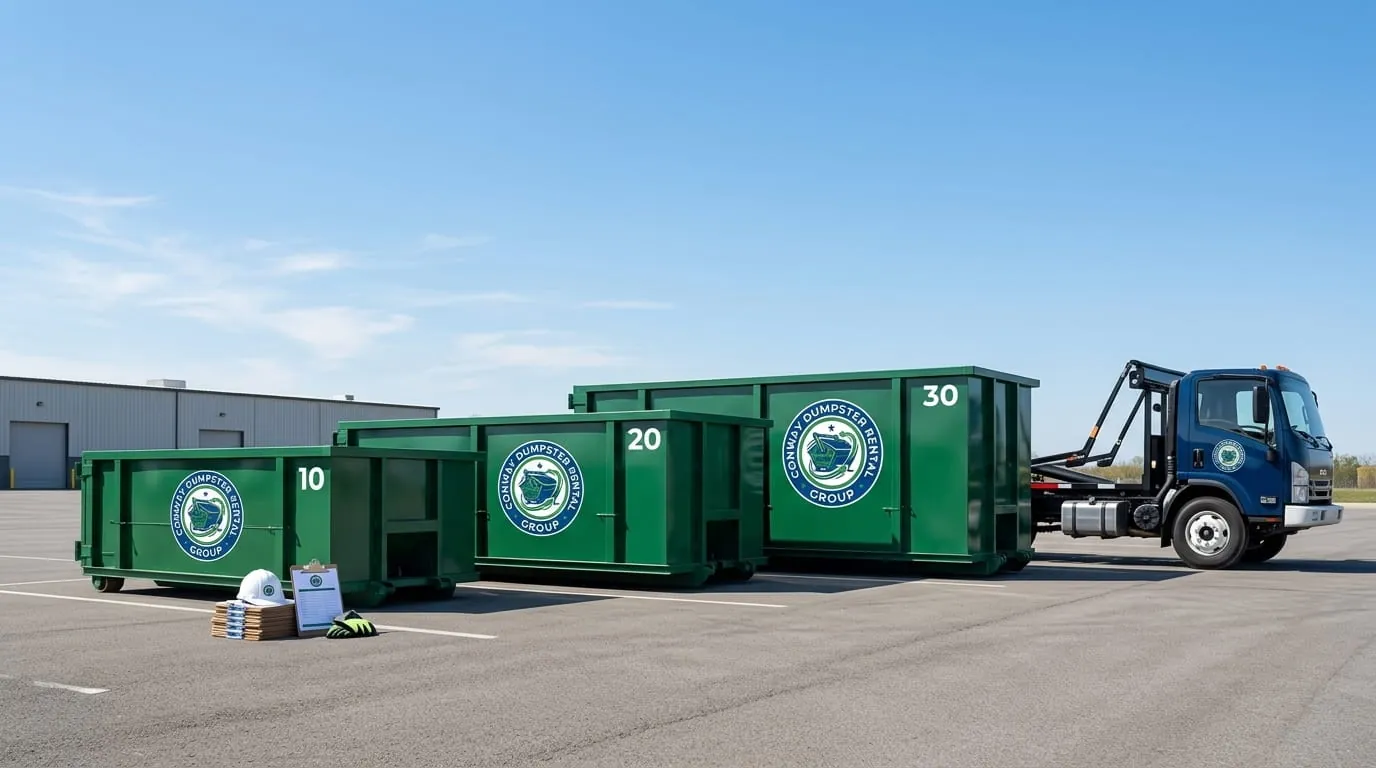
If you've never rented a roll-off before, guessing at the size feels a little like buying a suitcase for a trip you haven't packed for. Order too small and you're calling for a second haul halfway through the weekend. Order too big and you're paying for empty air. After years of dropping bins in driveways all over Conway and Faulkner County, I can tell you most people land in one of four sizes, and the right one usually comes down to two questions: how much stuff, and how heavy is it?
Let's walk through it the way I'd explain it to a neighbor standing in their garage.
First, What Does a "Yard" Actually Mean?
When we say a 20-yard dumpster, we're talking cubic yards of volume, not the length of the container or anything you'd measure with a tape on your lawn. One cubic yard is a cube three feet on every side. That's abstract, so here's the comparison I use on the phone: one cubic yard is roughly a full-size pickup truck bed loaded level to the rails.
So a 10-yard bin holds about ten of those truckloads. A 20-yard holds around twenty. It's not a perfect science, because a pile of loose drywall packs differently than tightly stacked boxes, but it gets you in the right ballpark fast. Keep that pickup-load picture in your head as we go through the sizes.
The Four Sizes Most Homeowners Use
Here's the quick reference. Dimensions vary a little by container, but these are typical for the roll-offs we run in Central Arkansas.
| Size | Typical Dimensions | Holds (pickup loads) | Best For | Weight Allowance |
|---|---|---|---|---|
| 10-yard | 12' L x 8' W x 3.5' H | ~10 | Small bath remodel, concrete, dirt, single-room cleanout | 2-3 tons |
| 15-yard | 16' L x 8' W x 4' H | ~15 | Larger remodels, medium cleanouts, small roofing jobs | 2-3 tons |
| 20-yard | 22' L x 8' W x 4.5' H | ~20 | Garage/basement cleanout, flooring, deck removal, mid-size roofing | 3-4 tons |
| 30-yard | 22' L x 8' W x 6' H | ~30 | Whole-home cleanout, new construction, large renovations | 4-5 tons |
The 20-yard is the workhorse. If you called me with no other information and just said "home project," that's the one I'd bet on. But the details matter, so let's match sizes to actual jobs.
Bathroom Remodel
A single bathroom gut, one vanity, tile, a tub, some drywall, generates less debris than people expect but more weight than they expect, thanks to that tile and old cast iron. A 10-yard dumpster handles most single-bath tear-outs comfortably. Doing two bathrooms or adding a bedroom to the scope? Step up to a 15 or 20. One tip: if you're keeping the old tub or vanity to sell or reuse, pull those out first, they eat a shocking amount of floor space in a small bin.
Garage or Basement Cleanout
This is bulky, light stuff, old furniture, boxes, holiday decorations that survived three moves. Volume is your limiter here, not weight, so a 20-yard is usually the sweet spot. You'll be surprised how fast a two-car garage fills a bin once you actually start pulling things out from the walls.
Whole-Home Cleanout
Clearing out an entire house, maybe an estate or a rental turnover, means furniture, appliances, carpet, and years of accumulation from every room. A 30-yard dumpster is built for exactly this. One large bin almost always beats renting a small one twice, both on cost and on your sanity.
Roofing Tear-Off
Shingles are deceptively heavy. A single layer on an average Conway roof can push weight limits before the bin even looks full. For most re-roofs, a 20-yard with a heavier weight allowance works, but if you've got multiple layers coming off, talk to us first, this is one where the wrong call gets expensive. As a rough gauge, a square of asphalt shingles (a 10-by-10 patch) weighs a couple hundred pounds, and older three-tab roofs with two or three layers stacked on top can double that in a hurry.
New Construction or Major Renovation
Framing scrap, sheathing, packaging, offcuts, it adds up quick and it's mostly volume. A 30-yard keeps the site clean and cuts down on swap-outs during a long build.
Deck Removal
Old lumber eats space more than weight. A 15 or 20-yard usually does a standard backyard deck. If the boards are waterlogged from years next to Lake Conway humidity, factor a little extra weight in.
The Part Everyone Gets Wrong: Volume vs. Weight
Here's the single most important thing in this whole guide, so I'm going to slow down.
Every dumpster has two limits: how much it holds (volume) and how much it can legally haul (weight). You can hit either one first. With light debris like furniture and cardboard, you'll fill the space long before you hit the weight cap. But with heavy material, you'll max out the weight when the bin still looks half empty.
The number one mistake I see: a homeowner orders a big 30-yard for a concrete patio tear-out, thinking bigger is safer. Then it's a third full and already over the weight limit. Heavy debris needs a SMALLER bin, not a bigger one.
What counts as heavy? Concrete, brick, asphalt, dirt, sod, rock, tile, and roofing shingles. This stuff is dense. A little fills a bin's weight allowance fast. That's why concrete and heavy debris almost always goes in a 10-yard, and often gets its own dedicated bin so it's not mixed with lighter junk. If you go over the weight allowance, you're paying overage fees by the ton, and those add up faster than a second rental would have.
So the rule of thumb flips depending on your material:
- Light and bulky? Go bigger. You'll run out of room before weight.
- Heavy and dense? Go smaller, and be honest about the tonnage.
- Mixed load with some concrete or dirt? Tell us, we'll help you separate it so you don't blow the weight limit on the whole thing.
A Few Things That Quietly Change the Size
Two projects that sound identical on paper can need different bins once you factor in the details. A few that trip people up:
- Access and placement. If your driveway is short or steep, or there are low branches over it, the physical footprint of a 30-yard might not fit even if the volume would. We'd rather know before the truck shows up.
- How long you'll have it. A bin sitting in your driveway for two weeks tends to attract "while we're at it" projects, and neighbors who notice an empty spot. Size for what you'll actually accumulate, not just today's pile.
- Prohibited items. Tires, appliances with refrigerant, paint, and chemicals can't just go in the bin. Setting those aside changes your volume math, and keeps you from a surprise fee.
- Loading habits. Breaking down boxes and stacking flat lets you fit noticeably more in the same container. Tossing things in loose can waste a third of the space.
A Simple Decision Framework
When you're not sure, run through these four questions:
- What's the biggest single item? If a couch or a bathtub is going in, you need a bin with a door or enough height to load it.
- Is the debris mostly heavy or mostly light? This decides whether "bigger" or "smaller" is the safer error.
- How many pickup loads, roughly? Picture it. Ten truckloads is a 10-yard, twenty is a 20-yard. Then round up one size for the stuff you always forget.
- Is this a one-and-done or a phased project? A weekend cleanout wants one right-sized bin. A month-long reno might do better with a bigger one you fill over time.
When people ask me to break the tie between two sizes, I usually say go one size up if the material is light, and stay put if it's heavy. Space is cheaper to buy than a second trip. Weight is not.
When in Doubt, Just Call
Honestly? A two-minute phone call beats any online sizing chart, including this one. Tell us what you're tearing out, roughly how much, and whether there's concrete or dirt in the mix, and we'll size it right the first time. We've done enough Conway bathrooms, garages, and roof tear-offs to know where the surprises hide.
We drop bins throughout Conway, Faulkner County, and the surrounding Central Arkansas area, and we're locally owned, so you're talking to someone who actually knows Dave Ward Drive from the back roads out past US-65. Curious what it costs? We break that down in our guide to dumpster rental cost in Conway, AR.
Ready to get sized up? Call Conway Dumpster Rental Group at (501) 585-7772 and we'll match you to the right bin, no upselling, no guesswork. You can also reach us through our contact page if you'd rather send the details in writing.
Still weighing your options between the popular sizes? Compare the 20-yard dumpster against the smaller and larger bins, then give us a ring at (501) 585-7772 to lock in your drop-off date.

Founder, Conway Dumpster Rental Group — sharing straight advice from more than 15 years of local hauling experience.
Frequently Asked Questions
What size dumpster do I need for a bathroom remodel?
For a single-bathroom gut, a 10-yard dumpster is usually plenty. It handles the vanity, tub, tile, and drywall while keeping you under the weight limit that heavy tile and cast iron can push. If you're remodeling two bathrooms or expanding the scope, step up to a 15 or 20-yard.
What size dumpster do I need for a garage or basement cleanout?
A 20-yard dumpster is the sweet spot for most garage and basement cleanouts. That debris is bulky but light, old furniture, boxes, and clutter, so you'll run out of space long before you hit the weight cap. A two-car garage fills a 20-yard faster than most people expect.
Why do I need a smaller dumpster for concrete and dirt?
Concrete, dirt, brick, and asphalt are extremely dense, so they hit the weight limit long before they fill the space. A 10-yard bin loaded with concrete can be over its weight allowance while still looking half empty. Going bigger only means you pay for volume you can't legally use, and you risk overage fees.
How much is one cubic yard in real terms?
One cubic yard is a cube three feet on each side, roughly the amount of debris that fits in a full-size pickup truck bed loaded level to the rails. So a 20-yard dumpster holds about twenty pickup loads. It's a handy way to estimate: picture how many truckloads your project will make.
What happens if I go over the dumpster's weight limit?
Every dumpster has a weight allowance included in the rental, and going over it means paying overage fees charged by the ton. Those fees add up fast with heavy debris, often faster than a second rental would have cost. That's why it's worth a quick call to (501) 585-7772 so we can size it right before drop-off.